Photo courtesy San Sharma
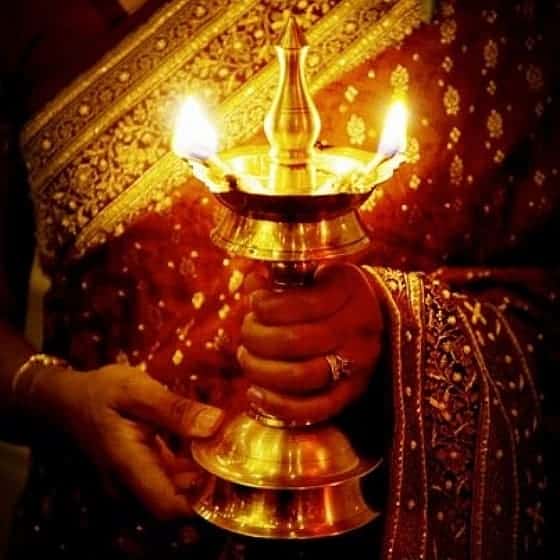
Diwali means “rows of lighted lamps” and it is also called the Festival of Light. It is the most enthusiastically celebrated festival in India — which is saying a lot! Diwali is the equivalent of Christmas — a big, festive celebration that brings families together and is the highlight of the holiday season. There are five days of festivities, each marked with different pujas (prayers) and rituals.
I love Diwali, and though I have only spent one Diwali in India, I remember it fondly. I went shopping with Ajay’s mother for gifts, decorations, flowers and sweets a few days before, and on the morning of Diwali she had me decorating the family mandir before my eyes were completely open. Later, I helped fill hundreds of small diyas with oil and wicks, and then place and light them around the terrace and down the stairs, etc. In the early evening we had a puja in the mandir, which was my favourite part of the entire day. And at night, we joined the millions of other Delhi-ites blasting fireworks and firecrackers into the night sky. It was deafening and created hazardous smog, but I appreciated the gusto with which people were celebrating.
There are lots of other places to celebrate Diwali in India; read on for some suggestions culled from Breathedreamgo Twitter and Facebook friends. (more…)
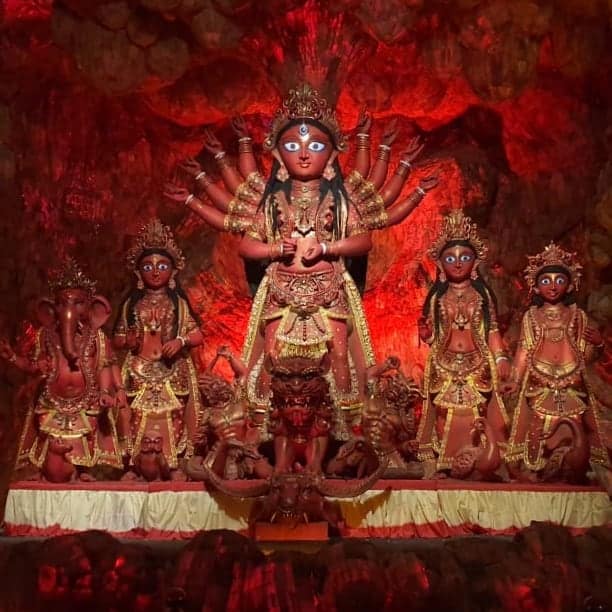
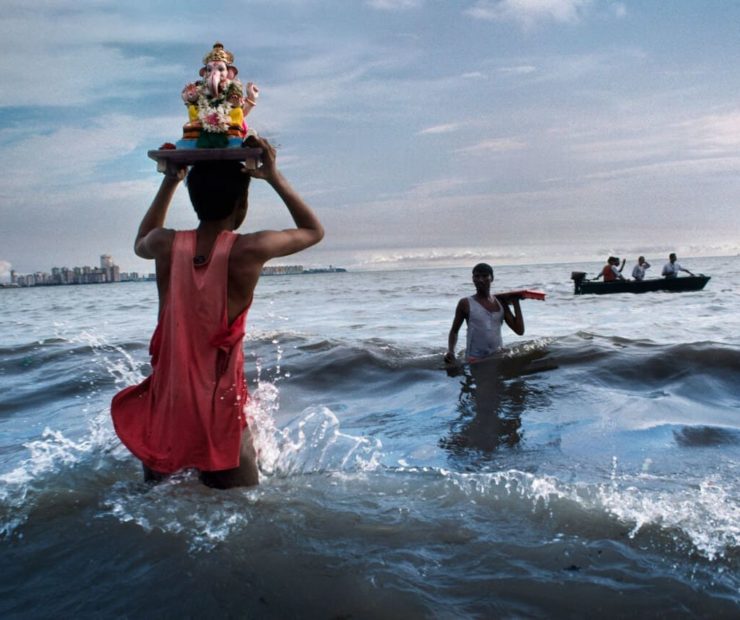
The photo above is from the GoIndia.About.com site — which has a great guide to Ganesh Chaturthi — how the idols are made, where the best ones are located, etc. The editor, Sharell Cook, lives in Mumbai and stays on top of happenings there and in India in general. It’s a great resource for news, information and fascinating stories. Following are the other five top photos. (more…)

photograph of people playing Holi in India by Dave Bouskill, PicturethePlanet.com
I love this photo by Dave Bouskill of Picture the Planet. It’s of Holi, of course, the festival of colour, a celebration that everyone in India loves and plays with unabashed gusto. Holi ushers in Spring, which is probably why it is such an energetic, even frenzied, celebration. I’ve been in India for Holi three times: I played once with my fellow ashramites in Rishikesh and twice with my family in Delhi. Like many of the holidays in India, Holi is a family-oriented celebration, and includes other rituals like eating sweets and — as always in India — just spending lots of time with each other, drinking tea and being together.
The meaning of DiwaliDiwali in India is like Christmas in Canada. It’s the biggest festival of the year, celebrated all over India, with lights, firecrackers, flowers, parties and pujas. Diwali (or Deepavali) celebrates the return of Lord Rama and Sita from exile, and the triumph of light over dark. This year, 2010, it takes place on November 5, on the new moon night, so the sky is absolutely dark — the better to see the firecrackers that people set off in an absolute frenzy. If you are Canadian, you can celebrate Diwali by entering a contest to win a trip to India.
The upcoming year, 2011, is the the Year of India in Canada, and the good folks at IndiaTourism are sponsoring a WIN A TRIP TO INDIA! contest, along with Absolute Tours and my friends at Indus Travels — who are my partners for my BreatheDreamGo trips to India. By the way, the tours are closing in mid-November 2010, so if you want to go to India with me this winter, act now by filling out a booking form. (more…)
Ganesh Chaturthi takes place every year in late August or early September. It is the birthday of the popular Hindu elephant-headed god, son of Shiva and Parvati. This festival is celebrated all over India, but especially so in Mumbai where grand processions bear huge idols to the sea for immersion. Ganesh is the bestower of luck, the remover of obstacles and the god of safe travels. I always carry a small Ganesh charm with me while I travel in India.
“No,” said the khaki-clad policeman. “You don’t have the right pass.” It took me a moment to grasp that I was not going to be able to join my colleagues on the media platform. The spectacle of hundreds of naga sadhus parading into the centre of Haridwar, India was the pinnacle of the Kumbh Mela, the largest spiritual gathering on earth, and I wanted to see it
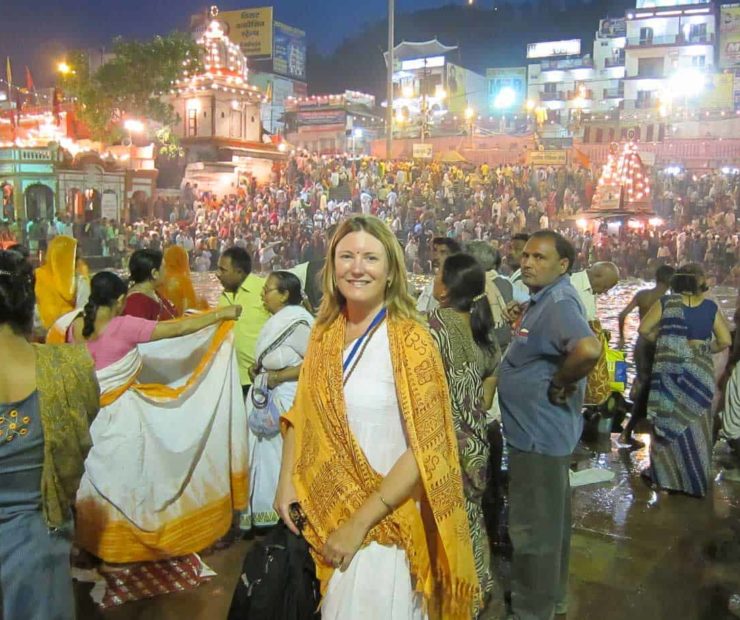
That morning, I rose before dawn and walked 13 kilometres into Haridwar with a group from the ashram to take a dip in the Ganges River. It was the most auspicious moment to bathe during the festival, and millions of devotees were streaming into the city to take part.
After bathing, I separating from my ashram group to join my journalism colleagues on the platform. When I was turned away, I was stunned. The sun was climbing in the sky, I didn’t know the route back and the city was completely closed and packed with pilgrims.
Buoyed by the intense devotional energy, I somehow found the winding route back to the ashram. Arriving, I felt exhilarated and realized I would never be the same.
That morning, I discovered the truth and power of ritual. It’s not about the achievement. It’s about how a peak experience can change our idea of who we are and what we are capable of. Which is a lot to get out of a long walk on a hot day in north India.
This post has been entered into the Grantourismo and HomeAway Holiday-Rentals travel blogging competition.
Every summer, ISKCON (International Society of Krishna Consciousness — otherwise known as the “Hare Krishnas”) holds a picnic on Toronto Island called the Festival of India – Feed Your Soul. It’s a wonderful event and I never miss it. Everything is free — even the food! — and people of all ages attend. You can join a free outdoor yoga class, have your astrology chart done, enjoy the vegetarian feast, buy Indian clothes and trinkets and best of all, sing and dance along to incredibly happy, joyful kirtan (sacred) music. The event wraps up on Sunday late afternoon with a rousing kirtan session that everyone joins in. It’s basically a celebration of god, a spiritual rave — and no drugs or alcohol are needed to send everyone in a frenzy of joy. I took this video while everyone else was in the kirtan tent chanting along to the music. More pictures from the event follow.
This is a video of the aarti (ceremony to honour the Ganges River) that happens each day at dusk in Haridwar, India. I took this during the Kumbh Mela, the largest religious gathering on earth. I was standing on a media platform in Har-ki-Pauri, the sacred centre of Haridwar. Notice how the Indian authorities set up the media platform with a electrical wires marring the view of the aarti! But still, I think I got a lovely shot of women int he crowd when I panned down across the river to the side I was on. Of course, a modest video like this in no way captures the heat, the smells, the enormous size of the crowd and the intense devotional energy that was palpable in the air. It was an amazing experience to be there. A privilege, really.
I took this video from the media platform in the middle of Har-ki-pauri, Haridwar (north India) during the Maha Kumbh Mela — which is the world’s largest gathering of humanity on earth. To read about this massive Hndu spiritual festival — and my harrowing adventures finding myself alone in the midst of millions — click here.