The moment it hit me I was in India: mosque at Qutab Minar complex, Delhi 2005
It was six years ago today, December 6, 2005, that I landed in Delhi, India for the first time. It was Day One of my six-month odyssey; the start of my trip-of-a-lifetime; and the beginning of a new chapter in life, I hoped.
On my first morning in India, I stepped out into the warm December sunshine of my friends’ big, white, marble terrace in South Delhi and felt I had landed in heaven. It was warm, I was surrounded by a loving family and I was finally in India — a place I had dreamed of since childhood, but never thought I would ever see. I felt an immediate affinity with India; it was like going “home.” But I had absolutely no idea where the next six months would lead, what would happen, or what I would get out of the experience. (more…)

Photograph of Patnem Beach, Goa, India
How to get started as a travel blogger
Blogging while you travel can enrich your journey in more ways than one. It helps keep your friends and family back home informed, creates a permanent record of your trip and gives you the opportunity to take time to reflect on your experiences. Following are my top tips for getting started as a travel blogger.
First things first – you need to decide where to set up your blog. There are three main options: (more…)
I am continuing to read lots of books on India or by Indian or South Asian writers. It helps that I only get a limited number of channels on my TV — a TV that is so old I can’t even attach a DVD player to it. So, most nights I am “forced” to read. Lucky me.
But before I start, I want to mention two books that you will not find on any of my lists, so stop looking: Shantaram and The White Tiger. I just don’t think they deserve to be recommended.
[Note: Originally published as Recommended: Travel solo in India by Solotravelerblog.)
When I was 45 years old, I put everything I owned in storage, gave up my apartment and went to India for six months. It was the first time in my life that I had done anything like this. But it was time. I had always wanted to go to India and, after losing both of my parents, I knew it was now or never to go after my dreams.
Was I scared? You bet. But it was the “healthy” kind of scared – the kind that rises up from within and first whispers, then roars: if you overcome this, you will be forever changed. So I went. I jumped off the proverbial cliff to see how the universe would respond.
The largest gathering of humanity on earthMillions of people gather each year in North India to take a holy dip in the sacred waters of the Ganges, Yamuna and /or the mythological Saraswati rivers. Hindu devotees, pilgrims, saints and sadhus from all over India and the world turn up in huge numbers each winter. They believe that a holy dip in the sacred rivers during the Kumbh Mela washes away sins and can help them break the cycle of life and death and attain Moksha. (more…)
My India list: top places, events and festivals I want to seeI believe in magic. How else can you explain that the more I travel in India, the longer the list of places I want to go gets?! I was inspired to write this list by Mighty Girl’s Mighty Life List, so here goes. Here’s my list at the time of this writing (and I am sure I am missing several things …):
[NOTE: Originally published on Humantimes.com, September 2008.]
Mark Whitwell
After studying and practicing yoga for about 15 years, predominantly in Canada but also in India, I had the pleasurable experience of listening to a very outspoken yoga teacher pierce the veil of western illusions about yoga. He basically said the emperor has no lululemons.
I don’t know what it was like for others in the room, but listening to Mark Whitwell at the Yoga Festival of Toronto in August, 2008, was, for me, a sound for sore ears. I am at a point in my yoga journey when I want to try and understand the original intentions of yoga – without the overlay of western thinking, ideas and culture.
[NOTE: Originally published on Journeywoman, July 2009.]
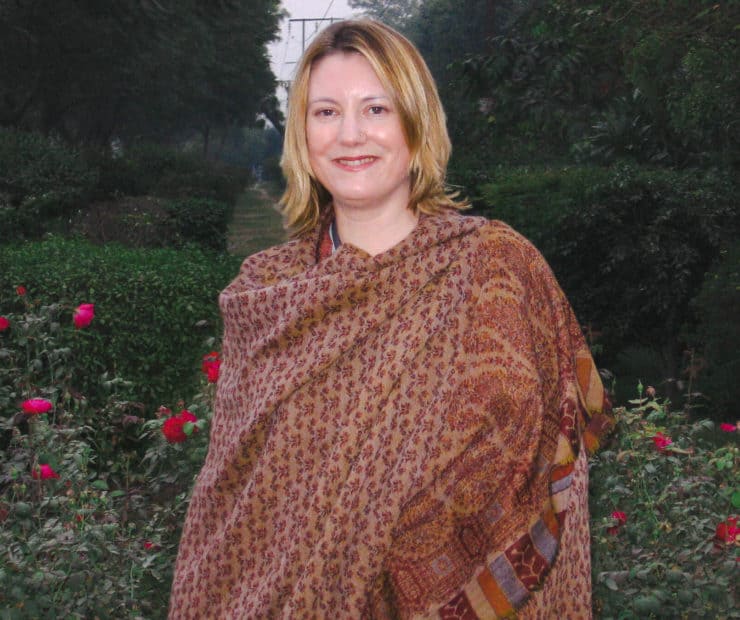
Moi, in salwar kameez, at Kanyakumari - the very southern tip of India
Aside from good walking shoes and sandals, a one-piece bathing suit and cotton bras and underwear – or, if you prefer, the synthetic kind that wicks away sweat – don’t bring any clothes to India. If you land in Delhi, head straight to one of the Fabindia outlets and stock up on inexpensive cotton “suits.” The three-piece suit (in Hindi, salwar kameez) consists of a long or short tunic over fitted or wide-legged pants, topped with a long scarf, called a dupatta. These outfits suit the climate, the need for modesty and will help you fit in, mitigating your status as a moving target for gawkers, touts and beggars.

Moi, with friends, at the Taj Mahal
- Go to the Taj Mahal. Yes, it’s worth it. It may be one of the few times in your life when all the hype and hyperbole actually fails to capture the spectacular beauty of the real thing.
- Take the train. Traveling by train in India is an adventure. Indian Railway is the world’s biggest employer (1.2 million employees) and everyone takes the train, from ministers to farmers. It takes a bit of time to master the class system (2AC is a good choice); the new online ticket system really helps. You will meet lots of friendly people, no matter which class you travel.
- Learn a few words of Hindi. Most educated people speak English, but working class people and villagers rarely speak more than a few words. “Namaste” is a common greeting; “theek hai” is okay; “accha” is, is that right?; “jaao” is go away’ “chai” is tea; “paani” is water.
A while I ago, I wrote a blog post that listed my Top 10 Books on India (thus far). This is the second installment in my series, Books I love about India.
1. Kim by Rudyard Kipling. It’s a masterpiece. I read it with my jaw on the floor. I have been reading for, oh, 43 years, give or take, and I have never read a book that is so in the moment. You tramp along with Kim down the streets of Lahore, on the Grand Trunk Road, through Himalayan passes. Every sound, every smell, every gesture, every accent is evoked. The dust swirls around you, the smell of cooking food entices you, the fresh air of the mountains revives you. Kipling knew the road in India, and he knew how to capture it in words. And Kipling is not just a master of description — he is a master story-teller. Like India herself, this story is bold, complex, subtle and ambiguous. Though it is not an easy read, it is hugely rewarding. I will be reading it again soon.