Tag Archives | Rajasthan

Bundi: Exquisite jewel needs polishing

Photograph of Bundi Garh Palace, Bundi, Rajasthan, India

Bundi’s “goblin built” Garh Palace

Bundi’s shine is dulled by neglect — but magic is intact

Driving in to Bundi from the train station, through the flat, dusty unpromising outskirts, did nothing to portend charm, beauty or cultural significance. But then the road veered around a mountain and the valley bowl that holds the ancient town appeared. Nawal Sagar, the artificial lake, lay at the centre, dotted with shrines, covered in leaves, and surrounded by crumbling palaces and havelis. On the far side, an improbable gothic palace – made by goblins, according to Rudyard Kipling – hung from the far mountain, providing a dramatic backdrop, and a medieval fort ran across the top. I was instantly fascinated.

We drove right into the heart of the old town, parked, and began walking up a sloping, narrow lane. As the lane twisted and turned, and the walls and protruding, carved balconies of decaying havelis closed in around us, I got the distinct feeling that I had entered into an altered state – suddenly I was in medieval Europe, perhaps walking up a Venetian alley. Finally, the alley led up a ramp to a very, very high arch: the entrance to my hotel, Bundi Vilas. Read about this wonderful place Bundi Vilas: The perfect haveli hotel. Continue Reading →

Comments { 10 }

Looking for India’s tigers in Ranthambore

Photograph of spotted deer at Ranthambhore National Park and tiger reserve, Rajasthan, India

Spotted deer at Ranthambhore National Park and tiger reserve, Rajasthan, India

Tiger Tales: A species in danger

My first night at The Farm Villa, near Ranthambore National Park and tiger reserve, I pointed out the constellation Orion to owner-manager Satish Jain. The hunter was highly visible in the night sky over rural India, his belt of stars particularly bright. I told Satish that my father, Douglas, taught me about that constellation and I have associated it with him ever since — and especially since his death seven years ago.

The next night I walked out onto the rooftop terrace of The Farm Villa and, though the night was clear, Orion was nowhere to be seen. There was a hole in the sky, a hole that mirrors the hole in my heart, where I am missing my father. Likewise, there is a hole in Ranthambore since the March 1, 2011 death of legendary tiger protector Fateh Singh Rathore. And there is a hole in the effort to save India’s tigers from extinction. Though the 2010 census figures show an increase in the tiger population in India from 1,411 to 1,706 over the past four years, the habitat — and especially the all-important corridors — have decreased significantly. Tigers need a lot of land to hunt, roam, and mate, and without it, it is unlikely they will be able to survive and thrive in India. For an excellent article that captures the complexities and challenges of the situation facing India’s tigers, I recommend reading The failing fight to save India’s tigers by Stephanie Nolen of the Globe and Mail. For the rest of my story about visiting Ranthambore, read on. Continue Reading →

Comments { 10 }

Photo of the week: Jaisalmer

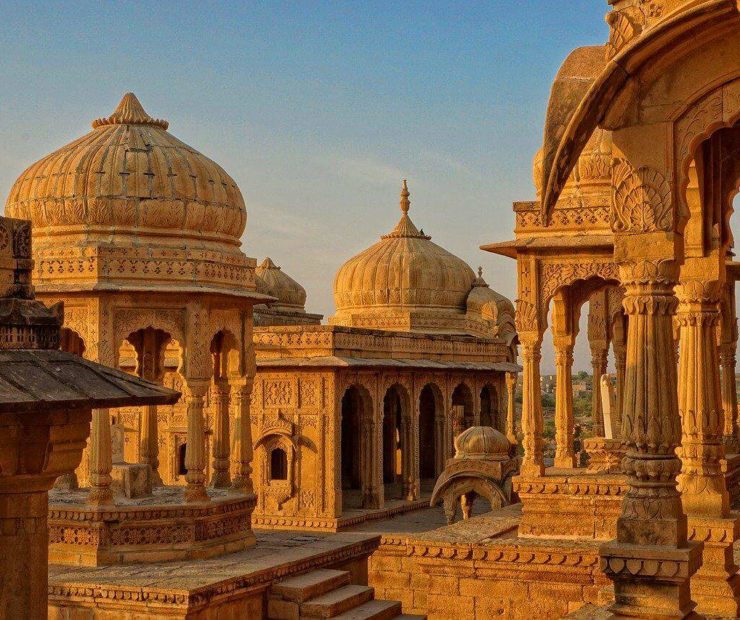
Magical Jaisalmer, Rajasthan, by photographer Andrew Adams

Jaisalmer by Andrew Adams

Enchanting Jaisalmer by Andrew Adams

This sublime photo by Canadian photographer Andrew Adamsis of Jaisalmer, Rajasthan — a former trading outpost in the Thar Desert now known chiefly for tourism and camel safaris. This photo is of Gadi Sagar, the lovely water tank that was once the main water supply for Jaisalmer. Water in the desert takes on a mythical stature, especially in rain-starved western Rajasthan.

Jaisalmer is one of my favourite places in India. The fairy-tale fort in the centre of town rises like a mirage from the baked earth, and the power of the desert can fling open your eyes and your heart. It is a powerfully enchanting place. I have written about Jaisalmer several times. Once, in this post To Jaisalmer, and also in a feature article that is one of the 10 stories presented in my book, which you can read about here in Song of India.

If you enjoyed this post, you can….

Get updates and read additional stories on the Breathedreamgo Facebook page.

Buy Song of India, a collection of 10 feature stories about my travels in India. E-book version is now only $1.99.

Subscribe to the free — and inspiring! — e-newsletter, Travel That Changes You.

Comments { 2 }

Top 5 myths about India

photograph of snake charmers in Jaipur, India

snake charmers in Jaipur, India

Myth #1: Traveling in India is dangerous

Before I went to India for the first time, I was warned to my teeth about how dirty and dangerous India is, especially by the doctor at the travel medical clinic. She really tried to put the fear of disease into me, and I went to India the first time loaded with precautionary supplies, pills and additional health insurance. Then I landed in Delhi at the very civilized home of my friend Ajay, who lives with his family in the Delhi equivalent of Forest Hill (one of the most upscale neighbourhoods in Toronto), and they laughed at all my stuff. When I did get sick I went to the local Max Medical Centre and after waiting about 10 or 15 minutes I got to see the British-trained head of internal medicine. The medical centre was spotlessly clean, modern and efficient, better than almost anything I’ve seen in Canada, and the visit cost 500 rupees or about $10.

At this point in my journey, about 10 days in, something began to dawn on me. I realized that many people in Canada, including me, were of the idea that India is a barbaric place. In fact, I found it to be very civilized. I no longer carry all those supplies and pills, I no longer buy extra health insurance. I practice caution, but I don’t assume the worst, I assume the best. And guess what? Continue Reading →

Comments { 75 }

Maharajas of India

Mariellen and sati prints, Mehrangarh Fort, Jodhpur, Rajasthan

Mariellen and sati prints, Mehrangarh Fort, Jodhpur, Rajasthan

If these walls could speak: Jodhpur Fort

[NOTE: I originally wrote this for the Art Gallery of Ontario's Art Matters blog for Maharaja: The Splendour of India's Royal Courts, the exhibit that runs from November 20, 2010 to April 3, 2011.]

When I was a child, I was obsessed with the 1,001 Tales of the Arabian Nights. I read every book in the library and painted huge colourful murals on my walls of genies coming out of bottles, turreted palaces and fairy tale forts. Many years later, as an adult, I went to India to recover from loss and depression, stemming largely from the sudden and unexpected death of my Mother.

Imagine my surprise when I went to the Maharaja’s Palace in Mysore, and to the land of Maharajas, Rajasthan – and saw my bedroom walls come to life! I cried many times touring these fantastic palaces as I remembered my Mother and how she had brought me up to believe in magic and the possibilities of life. Continue Reading →

Comments { 6 }

My favourite hotels in India, part one

Rooftop swing chair, Inn Seventh Heaven, hotel, Pushkar, Rajasthan, India

Rooftop swing chair, Inn Seventh Heaven, Pushkar, Rajasthan, India

Top 5 hotels in India

These are my top 5 hotels in India. I have stayed in all of them, and no considerations of sponsorship, price or relationship has influenced my decisions to recommend them. I look for places that combine personality, charm, comfort and integrity. Rooms must be clean, staff must be friendly and the hotels have to offer a  little something special — such as extreme helpfulness or impeccable service — to make it on the list. Part two, favourite hotels 6-10,  coming soon.

1. The Windamere Hotel, Darjeeling

The Windamere Hotel site. It’s probably the most expensive hotel on the list, and I stayed there as a guest of IndiaTourism, which might cause you to doubt my credibility for recommending it — but I genuinely LOVE this hotel. It’s number one for a reason: it’s my favourite hotel in the world. No, it is not the newest or the sleekest, but the Windamere is a very special place. It’s a near-perfect combination of stunning location, English-cottage-inspired coziness and impeccable service. Originally a home for bachelor tea planters out from England to make their fortune in India in the 19th century, it was turned into a hotel after World War II. Continue Reading →

Comments { 7 }

Is backpacking in India a beaten path?

Taj Mahal, India

Taj Mahal, India

Responsible travel sometimes means getting off the beaten trail

India is a vast and beautiful country, filled with world heritage sites, throbbing megalopolises, sacred pilgrimage routes, tropical beaches and snow-capped mountains. But along with the ubiquitous tourist draws such as the Taj Mahal, the forts and palaces of Rajasthan and the intricately carved temples of Tamil Nadu, India is home to a very well-trodden backpacking trail.

In a recent blog entry, Authentic travel in India, I wrote about crossing the cultural divide and really getting to know the country you are traveling in. Sara C., who commented on that blog, said. “I spent two months in India in 2008, and by the second month of my trip people would routinely assume that I was an expat living fully within Indian culture. This was because I didn’t dress or carry myself like a backpacker and made an effort to learn local customs and connect with the people around me. Most of the backpackers act like backpackers – they aren’t really interested in getting to know Indians on their own terms or really connecting at all with the culture beyond platitudes.”

Read the rest of the discussion, including the comments! Continue Reading →

Comments { 21 }

My first bus ride in India

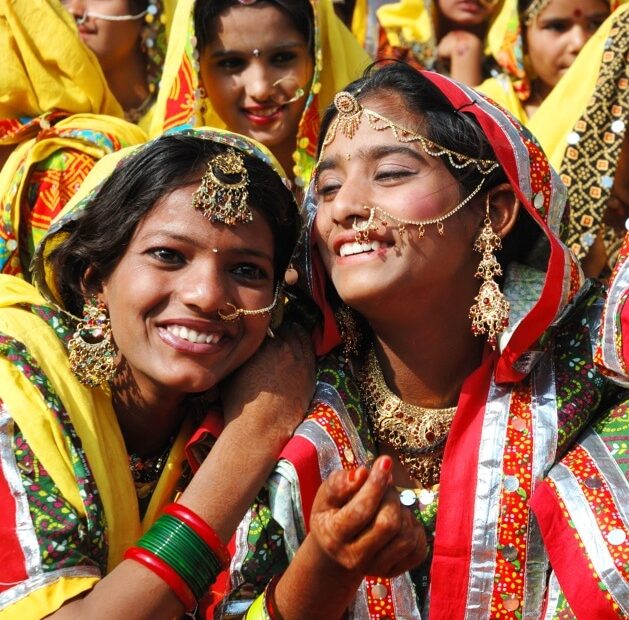
women in Rajastahn

women in Rajasthan

Traveling into the heart of India

In the last four years, on three separate trips, I have traveled for about 11 months in India by myself. I have been on or in almost every mode of transport you can think of: plane, train, taxi, private car, autorickshaw, bicycle rickshaw, motorcycle, even elephant and camel. But until very near the end of my third trip, I had never been on a public bus.

I was beginning to think I was afraid. Public buses in India are known for being hot and crowded and free of modern amenities such as A/C and suspension. I had heard stories about leering men, live chickens and lunches cooked on small stoves.

Continue Reading →

Comments { 6 }

Unraveling the significance of turbans

Turbans in Pushkar

Turbans in Pushkar

The colours of India and their meaning

In India, it is not only the flamboyant traditions and rituals that have cultural significance. Even clothing and jewelry tell stories, and the more you know, the more you are able to read between the lines. From toe rings to turbans, the clothing Indians wear denotes status, caste, marital state and much more. Knowing the basics can give you insight into the culture and also may help smooth your trip. In Rajasthan – the land where peacocks fly low over the camel-studded desert at sundown and impossibly romantic forts evoke tales of proud Rajput royals – the men are known for wearing large printed turbans in a variety of styles, shapes and colours. “Turban spotting” is a favourite tourist activity.

Continue Reading →

Comments { 2 }

To Jaisalmer

Magical Jaisalmer, Rajasthan, by photographer Andrew Adams

Magical Jaisalmer, Rajasthan, by photographer Andrew Adams

Connecting to childhood imagination

When I was a child I painted huge colourful murals on my walls – always something I considered exotic and oriental like genies coming out of bottles and turret-topped palaces and stone fortress-like cityscapes. Imagination was more important than reality, and I stoked the fires of my imagination with fabulous tales from the Arabian Nights, incredible stories from the Greek Myths and any other magical tales I could get my hands on. I sensed there were worlds hidden within the known world; things were not as they seemed. I stared beneath the surface of the lake at the cottage and watched the swaying seaweed and the crayfish swimming backwards and the choreographed schools of small fish. In those moments I felt I disappeared, and only my attention on the secret underwater world was real.

Continue Reading →

Comments { 5 }