[NOTE: Originally published on Journeywoman, July 2009.]
Moi, in salwar kameez, at Kanyakumari - the very southern tip of India
Aside from good walking shoes and sandals, a one-piece bathing suit and cotton bras and underwear – or, if you prefer, the synthetic kind that wicks away sweat – don’t bring any clothes to India. If you land in Delhi, head straight to one of the Fabindia outlets and stock up on inexpensive cotton “suits.” The three-piece suit (in Hindi, salwar kameez) consists of a long or short tunic over fitted or wide-legged pants, topped with a long scarf, called a dupatta. These outfits suit the climate, the need for modesty and will help you fit in, mitigating your status as a moving target for gawkers, touts and beggars.

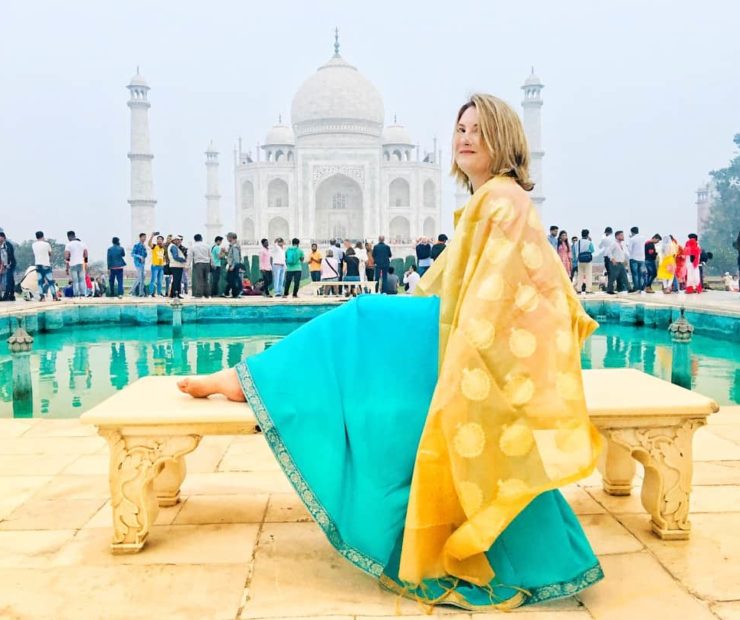
Moi, with friends, at the Taj Mahal
- Go to the Taj Mahal. Yes, it’s worth it. It may be one of the few times in your life when all the hype and hyperbole actually fails to capture the spectacular beauty of the real thing.
- Take the train. Traveling by train in India is an adventure. Indian Railway is the world’s biggest employer (1.2 million employees) and everyone takes the train, from ministers to farmers. It takes a bit of time to master the class system (2AC is a good choice); the new online ticket system really helps. You will meet lots of friendly people, no matter which class you travel.
- Learn a few words of Hindi. Most educated people speak English, but working class people and villagers rarely speak more than a few words. “Namaste” is a common greeting; “theek hai” is okay; “accha” is, is that right?; “jaao” is go away’ “chai” is tea; “paani” is water.

Turbans in Pushkar
In India, it is not only the flamboyant traditions and rituals that have cultural significance. Even clothing and jewelry tell stories, and the more you know, the more you are able to read between the lines. From toe rings to turbans, the clothing Indians wear denotes status, caste, marital state and much more. Knowing the basics can give you insight into the culture and also may help smooth your trip.
In Rajasthan – the land where peacocks fly low over the camel-studded desert at sundown and impossibly romantic forts evoke tales of proud Rajput royals – the men are known for wearing large printed turbans in a variety of styles, shapes and colours. “Turban spotting” is a favourite tourist activity.
Travel light and right
We all have small secret areas of expertise, and one of mine is packing for India. I am claiming this expertise based on three facts:
1) I have packed to go from my country (Canada) to India five times,
2) I did a LOT of research before I left on my first big, six-month trip to India — and brought a LOT of stuff I never used,
3) I have packed for about a 20-25 domestic trips within India in the many months (more than a year) I have spent in the country.
So, if you will accept my qualifications, you can confidently print this list before you go. Even in the few years I have been traveling to India I have noticed you can get more and more of the things we North Americans have come to depend on. But there’s still a few things you probably want to have in your backpack — yes, backpack — just in case.