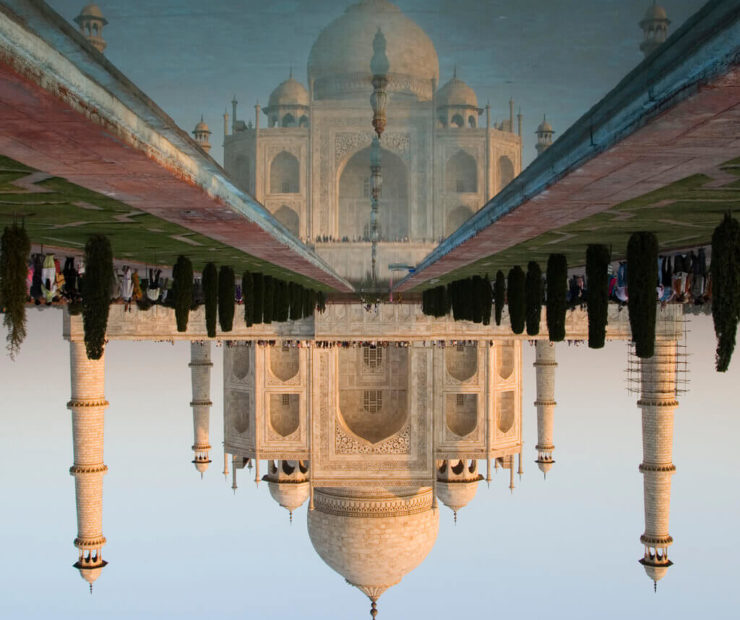
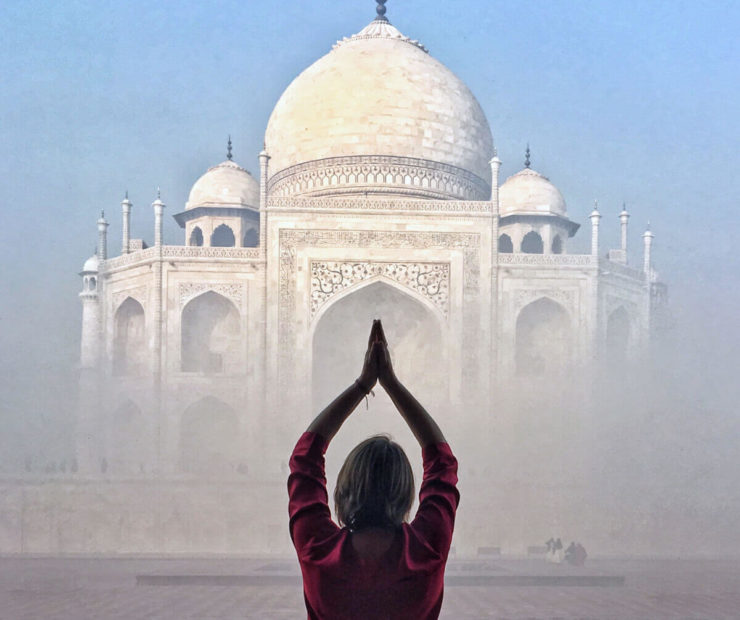
Taj Mahal, Agra, India 2006
[Note: Originally published on Bootsnall as 10 Reasons to visit India now.]
1. The Taj Mahal. Yup, it is. The world’s most beautiful building. This is one of those rare times in life when all of your expectations will be blown away, no matter how much hyperbole you’ve been exposed to about it; no matter how many pictures you’ve seen; no matter how much poetry you’ve read. Tagore had it right when he wrote the Taj Mahal is, “a teardrop on the face of eternity.” See it at sunrise, put up with Agra, do whatever you can, but make sure the Taj Mahal is on your itinerary or you will kick yourself for eternity. (more…)
BreatheDreamGo badges availableIndia is still largely a traditional country, and knowing how to dress can mean the difference between a pleasant journey and many wonderful moments of contact with some of the warmest people on earth — or a sea of hassles.
In spite of what you see in Bollywood movies, most Indians still favour modest, traditional clothing – and you may find that you enjoy your time in India more if you do too. This is especially true once you leave inner city Delhi and Mumbai, or if you go to any social occasions (such as weddings), festivals (such as Diwali or Holi) or to religious gatherings, temples, gurdwaras and mosques. And it’s true in places frequented by lots of tourists.
Though Rajasthan is the Indian state most visited by tourists, it is still one of the most traditional and conservative – and this is amply evident by the way people dress, work and live. Personally, I think it is wise when in Rajasthan to do as the Rajasthanis do. Read on for tips on how to dress for social success in India. (more…)
Myth #1: Traveling in India is dangerous
Before I went to India for the first time, I was warned to my teeth about how dirty and dangerous India is, especially by the doctor at the travel medical clinic. She really tried to put the fear of disease into me, and I went to India the first time loaded with precautionary supplies, pills and additional health insurance. Then I landed in Delhi at the very civilized home of my friend Ajay, who lives with his family in the Delhi equivalent of Forest Hill (one of the most upscale neighbourhoods in Toronto), and they laughed at all my stuff. When I did get sick I went to the local Max Medical Centre and after waiting about 10 or 15 minutes I got to see the British-trained head of internal medicine. The medical centre was spotlessly clean, modern and efficient, better than almost anything I’ve seen in Canada, and the visit cost 500 rupees or about $10.
At this point in my journey, about 10 days in, something began to dawn on me. I realized that many people in Canada, including me, were of the idea that India is a barbaric place. In fact, I found it to be very civilized. I no longer carry all those supplies and pills, I no longer buy extra health insurance. I practice caution, but I don’t assume the worst, I assume the best. And guess what? (more…)

Sita Sings the Blues
If you are planning to visit India, I have lots of resources right here on Breathedreamgo. Start by reading the following blogs: Advice for first time travelers, Top 5 Myths about India, Avoiding bed bugs, bacteria and bad guys, Top 5 things I’ve learned after a year of travel in India , Top 10 tips for women traveling in India and my Packing list for India. And don’t miss watching How to use an Indian toilet – it’s a funny and informative video by the great Wilbur Sargunaraj that will teach you a very important, essential skill.
I would also recommend reading about India. I have included a list of 10 books about India that I love, and 10 more books, and a list of spiritual books that I love, some of which are pertinent. Of course, there are loads more I haven’t read or even heard of — so let me know if you come across something good. (more…)
My Incredible India experience began with the incredible people at India Tourism. The helpful people at the India Tourism office in Toronto not only supplied me with contacts and all kinds of brochures and information, they are also sponsoring my upcoming trip. These people really do know India. If you don’t have an office near you, they have a very informative website, and offices throughout India. It’s unfortunate that there are many shady travel and tourism operators in India. But if you go through India Tourism, you can be sure of dealing with reputable people and organizations. Below is a list of Do’s and Don’ts India Tourism supplies to all visitors.
I often get emails from women traveling to India for the first time, and they are justifiably nervous about landing by themselves in Delhi at midnight. So, this post is for you. It is a collection of my best tips and advice. You should also check out 10 Tips for Women Traveling India , my post Planning to go to India? and Top 5 Myths about India.
Be cautious, but don’t be nervous. Be open, but don’t be naive. Yes, India is overwhelming to the first-time visitor and most people experience culture shock (you can spot first-timers by the deer-in-the-headlights look they have on their faces.) I have said in other posts on this blog (Traveling solo in India) that India is like the cave Yoda sends Luke into: you will only find what you bring with you. So, don’t bring fear. Most Indians are the nicest, friendliest and most helpful people you will ever meet. Even when they are trying to part you from your rupees, they are mostly very nice about it. (Always remember that there are many very poor people in India who have not had the advantages, nor the opportunities, that we in the west have.) (more…)
I am reading a fun little book called Indian English, published by Lonely Planet. The book attempts to explain the difference between English, Indian English and Hinglish (which is a mash-up of Hindi and English). Although my Hindi teacher, Guruji, was unimpressed by the book, it is clearing up more than a few points of confusion for me.
As well as explaining the development of English in India, how it is used today, and how it is combined with Hindi (and strongly influenced by Hindi), the book acts as an introduction to Indian culture. It briefly covers many areas of Indian life such as Bollywood, cricket, food, fashion and family and society, and of course provides lots of examples of commonly used terms in Indian English, Hindi and Hinglish.
Note about the cover: My copy has the fun term Total timepass! on the front, rather than My goodness. And it’s true, it is a total timepass, man!

Ghats of Varanasi
Indians tend to be very sensitive about how their country and culture are portrayed in the media. They seem to be especially critical of writers who practice, often unknowingly, ethnocentricity and cultural imperialism.* And they are not shy about voicing their criticisms.
I don’t blame them. But I am sympathetic to writers, too, who try to capture in words their experiences and observations about this tremendous country.
Here’s a primer on how to write sensitively about India (or any other “foreign” culture) and what to watch out for; plus three real-life examples of writers who missed the mark.
[Note: Originally published as Recommended: Travel solo in India by Solotravelerblog.)
When I was 45 years old, I put everything I owned in storage, gave up my apartment and went to India for six months. It was the first time in my life that I had done anything like this. But it was time. I had always wanted to go to India and, after losing both of my parents, I knew it was now or never to go after my dreams.
Was I scared? You bet. But it was the “healthy” kind of scared – the kind that rises up from within and first whispers, then roars: if you overcome this, you will be forever changed. So I went. I jumped off the proverbial cliff to see how the universe would respond.