Photo courtesy San Sharma
Diwali means “rows of lighted lamps” and it is also called the Festival of Light. It is the most enthusiastically celebrated festival in India — which is saying a lot! Diwali is the equivalent of Christmas — a big, festive celebration that brings families together and is the highlight of the holiday season. There are five days of festivities, each marked with different pujas (prayers) and rituals.
I love Diwali, and though I have only spent one Diwali in India, I remember it fondly. I went shopping with Ajay’s mother for gifts, decorations, flowers and sweets a few days before, and on the morning of Diwali she had me decorating the family mandir before my eyes were completely open. Later, I helped fill hundreds of small diyas with oil and wicks, and then place and light them around the terrace and down the stairs, etc. In the early evening we had a puja in the mandir, which was my favourite part of the entire day. And at night, we joined the millions of other Delhi-ites blasting fireworks and firecrackers into the night sky. It was deafening and created hazardous smog, but I appreciated the gusto with which people were celebrating.
There are lots of other places to celebrate Diwali in India; read on for some suggestions culled from Breathedreamgo Twitter and Facebook friends. (more…)
Michael is a new “Hindie” film from India with a powerhouse duo behind it: producer Anurag Kashyap and star Naseeruddin Shah. Directed by first-timer Rubhir Dasgupta, the film follows Shah’s eponymous character on a dark psychological journey through the streets of north Kolkata (Calcutta). Michael is demonized by an action from his past — accidentally shooting a 12-year-old boy while on duty as a police officer — and it’s ramifications on his present. His own son is about to turn 12; and he is terrified that the father of the dead boy is planning to kill his son for revenge.
The film is a study in karma, and while the storyline is interesting, the naturalistic talent of actor Naseeruddin Shah and the tarnished beauty of Kolkata are the real stars. As he explained after the film’s premiere at the Toronto International Film Festival (TIFF), both actor and location were very deliberately chosen by writer/director Rubhir Dasgupta.
Dasgupta was at the film, along with one of the other producers of the film, Guneet Monga. These filmmakers are part of the “new age” of Indian cinema. Kashyap wrote and directed That Girl in Yellow Boots, Gulaal and Dev.D, among other films; and wrote the Deepa Mehta film Water (one of my all-time favourite films). Monga was an associate producer on That Girl in Yellow Boots and a co-producer of Trishna.
The movies they make are very different than stereotypical “Bollywood” fare. They do not feature song-and-dance numbers, melodramatic love stories, big-budget productions or mega-stars. Instead, they evoke a sense of naturalism and tell dramatic, personal stories that reveal both psychological truth and modern-day India. (more…)

Uma Paro, Bhutan
Imagine my surprise when I arrived in Paro, Bhutan, was met at the airport by two very charming men, Kanchzen (my guide) and David (my driver), driven about 10 minutes up a hill outside of town to the Uma Paro boutique hotel, introduced to my butler Jeewan and shown to my 1,200-square-foot villa. It was a bit like waking up in Oz and seeing everything in Technicolor. Or having an old dress turn into a glittering gown and a pumpkin turn into a gilded carriage. I had to rub my eyes and pinch myself to believe it.

The bedroom in my villa
I really didn’t know what to do first. Explore the delights of my villa: Have a bath in the claw-foot tub? Warm up in front of the wood-burning traditional stove (called a bukhari)? Sit outside on my terrace and use the WiFi service on my laptop? Ask Jeewan to fetch me a fresh fruit smoothie from the hotel’s stellar kitchen? Or just stare out the enormous picture window in my bedroom at the million-dollar view of the Paro Valley and Himalayan peaks?
Or explore the hotel: Eat lunch in the glass enclosed circular dining room, Bukhari? Have a treatment at the COMO Shambhala spa? Swim in the indoor pool and use the steam room in the ladies dressing area? Or sit outside and have a cup of steaming chai?
I opted for lunch in the dining room, knowing that over the course of the next five days I would get a chance to try everything else. And I did. (more…)

Taktshang (Tiger's Nest) Monastery, Paro, Bhutan
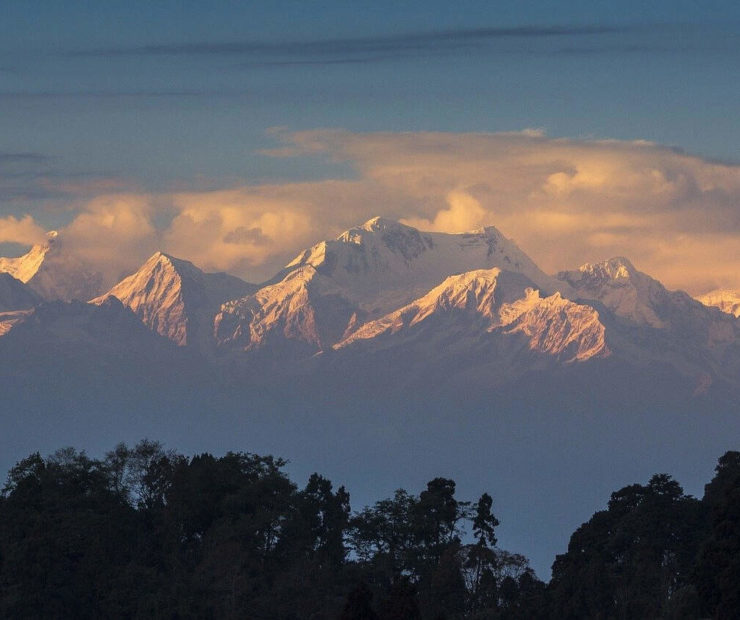
I almost jumped out of my seat when the pilot announced we were flying over Mount Everest. I was flying from Kathmandu to Bhutan, it was a clear day, and, lucky for me, I was seated on the left side of the plane — the side with the view — when the pilot said those magic words. In fact, we flew over four of the world’s five highest mountains, including Kanchendzonga, the massive five-peaked deity that straddles the border between Nepal and Sikkim. I really felt I was in heaven. Literally.
I have long been fascinated with Everest and drawn to the purity and grandeur of the Himalayas. It was the Himalayas — and the myth of Shangri-la — that drew me to Bhutan. The film (and book) Lost Horizon gave the world the term Shangri-la — and that film made a big impression on me as a child. It’s about a plane carrying several Europeans that crashes in Shangri-la, a Utopia hidden among the Himalayas.
Bhutan is often compared to a modern-day Shangri-la, owing to its pristine location, stable government and carefully preserved Himalayan culture. But it’s a remote, unknown, mysterious country, a country that few people visit, and I really didn’t know what to expect. (more…)

Dining on the rooftop terrace, under the shadow of Garh Palace
I had great expectations for Bundi Vilas. It is the highest rated hotel in Bundi on Trip Advisor, Lonely Planet gives it an excellent write-up and I had met owner JP Sharma in Delhi — and knew him to be an intelligent, professional man with excellent taste and a deep-seated commitment to tourism in Rajasthan. I was not disappointed. From the moment I came out of the twisting narrow alley leading up to the heveli and saw the soaring archway that marks the entrance, I sensed something special. Again, my intuition and India’s magic led me to a very special treasure, the kind of accommodation that is itself a destination.
And, of course, it helps that Bundi Vilas is located deep in the heart of the old city of Bundi — a town filled with fascinating architecture, exquisite art, elaborate stepwells and an ambience that is reminiscent of medieval Europe. You can read about Bundi in my post, Bundi: Exquisite jewel needs polishing. (more…)

Bundi's "goblin built" Garh Palace
Driving in to Bundi from the train station, through the flat, dusty unpromising outskirts, did nothing to portend charm, beauty or cultural significance. But then the road veered around a mountain and the valley bowl that holds the ancient town appeared. Nawal Sagar, the artificial lake, lay at the centre, dotted with shrines, covered in leaves, and surrounded by crumbling palaces and havelis. On the far side, an improbable gothic palace – made by goblins, according to Rudyard Kipling – hung from the far mountain, providing a dramatic backdrop, and a medieval fort ran across the top. I was instantly fascinated.
We drove right into the heart of the old town, parked, and began walking up a sloping, narrow lane. As the lane twisted and turned, and the walls and protruding, carved balconies of decaying havelis closed in around us, I got the distinct feeling that I had entered into an altered state – suddenly I was in medieval Europe, perhaps walking up a Venetian alley. Finally, the alley led up a ramp to a very, very high arch: the entrance to my hotel, Bundi Vilas. Read about this wonderful place Bundi Vilas: The perfect haveli hotel. (more…)

Spotted deer at Ranthambhore National Park and tiger reserve, Rajasthan, India
My first night at The Farm Villa, near Ranthambore National Park and tiger reserve, I pointed out the constellation Orion to owner-manager Satish Jain. The hunter was highly visible in the night sky over rural India, his belt of stars particularly bright. I told Satish that my father, Douglas, taught me about that constellation and I have associated it with him ever since — and especially since his death seven years ago.
The next night I walked out onto the rooftop terrace of The Farm Villa and, though the night was clear, Orion was nowhere to be seen. There was a hole in the sky, a hole that mirrors the hole in my heart, where I am missing my father. Likewise, there is a hole in Ranthambore since the March 1, 2011 death of legendary tiger protector Fateh Singh Rathore. And there is a hole in the effort to save India’s tigers from extinction. Though the 2010 census figures show an increase in the tiger population in India from 1,411 to 1,706 over the past four years, the habitat — and especially the all-important corridors — have decreased significantly. Tigers need a lot of land to hunt, roam, and mate, and without it, it is unlikely they will be able to survive and thrive in India. For an excellent article that captures the complexities and challenges of the situation facing India’s tigers, I recommend reading The failing fight to save India’s tigers by Stephanie Nolen of the Globe and Mail. For the rest of my story about visiting Ranthambore, read on. (more…)

In the old city of Sawai Madhopur, Rajasthan
Enjoying time in traditional India
When I was in Sawai Madophur to visit Ranthambhore national park and tiger reserve, my host Satish Jain of The Farm Villa, took me on a tour of the old city of Sawai Madophur — the city the tiger tourists never see — with a stop at his home village to meet his family. This is the India I love, away from the backpacking ghettos, tourist attractions and big-city sophisticates. Click here for photos from my day in the market and a video of children mobbing me in a village. (more…)

The Farm Villa, Sawai Madhopur
Best budget hotel in Ranthambhore
The Farm Villa in Sawai Madhopur, near Ranthambhore national park, Rajasthan, is peaceful, authentic, friendly and clean — and a unique budget accommodation option for exploring the area and visiting one of India’s most famous tiger reserves. It’s brand new and hasn’t been advertised or marketed as yet… so how did I find out about it?
From a friend of course, in typically Indian fashion. Here’s how it works: you tell your friends you want to go to Ranthambhore National Park to see a tiger and they immediately launch into helping you. Before you know it, you have an appointment with the director of Tiger Watch in Sawai Madhopur, to find out about the real tiger situation in Ranthambhore from someone who is on the ground — and you get an invitation to stay at a new guest house. (more…)